

SHOP COLLECTIONS
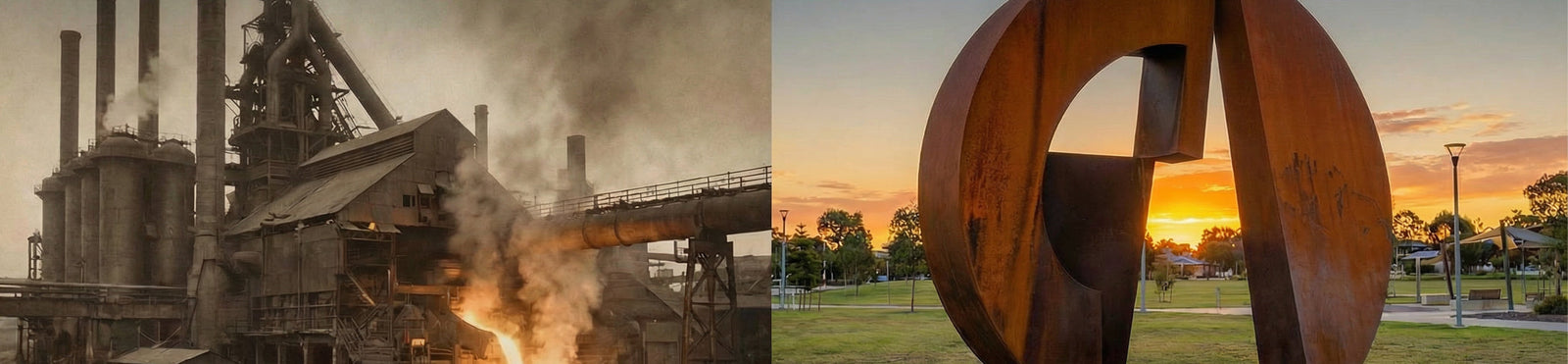

From Steel Mills to Sculptures: The Fascinating History of Corten Steel
January 21, 2026 5 min read
From Steel Mills to Sculptures: The Fascinating History of Corten Steel
The story of corten steel begins not in an architect's studio or an artist's workshop, but in the unglamorous world of industrial transportation. It's a tale of practical problem-solving that unexpectedly revolutionized modern design.
The Birth of Weathering Steel
In 1933, the United States Steel Corporation was facing a costly problem. Railroad cars, constantly exposed to harsh weather and carrying abrasive materials like coal and ore, were deteriorating rapidly. The constant cycle of rusting and repainting was expensive and time-consuming. The company's researchers, led by their materials science division, set out to develop a steel alloy that could resist atmospheric corrosion without protective coatings.
Their breakthrough came with the addition of small amounts of copper, chromium, nickel, and phosphorus to the steel composition. These alloying elements caused the steel to form a dense, tightly adhering oxide layer when exposed to weather a protective "rust" that actually prevented further corrosion. The material was patented and trademarked as COR-TEN steel, with the name derived from its key properties: CORrosion resistance and TENsile strength.
Early Industrial Applications
For its first few decades, corten steel remained firmly in the industrial realm. Railroad companies were the primary users, incorporating it into hopper cars and gondolas that transported coal, ore, and aggregates. The material proved its worth these railcars lasted significantly longer than their conventional steel counterparts and required far less maintenance.
By the 1950s, the steel industry began exploring other applications. Storage tanks, shipping containers, and industrial structures started utilizing weathering steel. The economic benefits were clear: reduced maintenance costs, longer service life, and elimination of painting expenses made it attractive for purely practical reasons.
The Architectural Awakening
The transformation of corten steel from industrial workhorse to architectural statement began in the 1960s. Modernist architects, always seeking new materials that expressed structural honesty and embraced industrial aesthetics, discovered weathering steel's unique visual qualities.
One of the earliest and most influential architectural applications was the John Deere World Headquarters in Moline, Illinois, designed by Eero Saarinen and completed in 1964. Saarinen chose corten steel for the building's exterior, recognizing that its rusty patina would harmonize with the surrounding farmland and reference the agricultural machinery the company manufactured. The building's success introduced corten steel to the architectural world as more than just a utilitarian material.
The 1970s saw increased adoption as architects appreciated how the material's changing appearance over time aligned with emerging ideas about buildings as living, evolving entities rather than static objects. Corten steel offered something rare: a material that improved with age rather than deteriorating.
The Minimalist Movement
Corten steel found its perfect artistic moment with the minimalist sculpture movement of the 1960s and 1970s. Artists like Richard Serra began creating monumental works in weathering steel, drawn to its industrial origins, substantial presence, and the way its surface texture and color changed with light and weather conditions.
Serra's massive corten steel sculptures, such as "Tilted Arc" (1981) and his later Torqued Ellipses series, demonstrated how the material could be both brutally industrial and surprisingly subtle. The warm, organic tones of the rust patina softened the geometric severity of minimalist forms, creating works that felt simultaneously ancient and contemporary.
Global Expansion and Innovation
By the 1980s and 1990s, corten steel had spread beyond North America. European and Asian architects embraced the material, each culture finding different meanings in its weathered surface. In Japan, weathering steel resonated with traditional aesthetic principles of wabi-sabi finding beauty in imperfection and impermanence.
Manufacturers continued refining the alloy composition, developing variations optimized for different climates and applications. New fabrication techniques allowed for more complex forms and finishes, expanding the material's design possibilities.
The Contemporary Era
Today, corten steel has achieved something remarkable: a material developed for railroad cars has become a design icon. It appears in everything from major museum buildings like the Museum of Pop Culture in Seattle to residential gardens and public parks around the world.
The material's popularity in the 21st century reflects broader cultural shifts. As sustainability became a priority, corten steel's longevity and low maintenance requirements aligned perfectly with green building principles. Its ability to age gracefully resonated with a design philosophy that values authenticity and natural processes over artificial perfection.
Contemporary landscape architecture, in particular, has embraced corten steel enthusiastically. Designers appreciate how it creates a warm, earthy contrast to plantings while developing a patina that makes it feel like part of the natural environment rather than an intrusion.
The Garden Revolution
The rise of corten steel in garden design represents one of its most significant contemporary applications. Beginning in earnest in the late 1990s and accelerating through the 2000s, landscape designers discovered that weathering steel offered unique advantages for outdoor spaces.
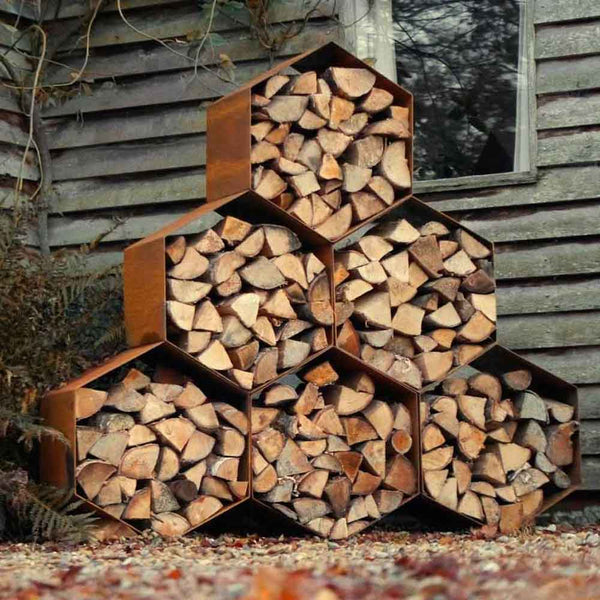
In gardens, corten steel serves multiple roles. Raised beds and planters made from the material provide clean, modern lines that frame plantings beautifully. The warm rust tones complement green foliage, purple-leaved plants, and ornamental grasses particularly well, creating color harmonies that feel both intentional and natural. Garden edging made from corten creates crisp boundaries between lawn and border while being virtually indestructible compared to wood or plastic alternatives.
Retaining walls constructed from weathering steel have become especially popular in contemporary garden design. They can handle significant soil loads while presenting a sleek profile, and unlike concrete or stone walls, they bring warmth to the space. Water features incorporating corten steel create dramatic visual effects as water flows over the rusted surface, sometimes creating additional weathering patterns that add to the material's character.
The material's popularity in residential gardens grew alongside the trend toward outdoor living spaces and the integration of sculptural elements into landscapes. Garden designers found that corten steel could serve as both infrastructure and art and a practical retaining wall could also be a striking focal point. Its industrial aesthetic brought a contemporary edge to gardens while its earth tones kept it from feeling cold or out of place among plants.
Urban gardens and rooftop spaces have particularly benefited from corten steel's properties. Its durability in exposed conditions, resistance to wind and weather, and ability to withstand harsh urban environments make it ideal for city gardens where conditions can be challenging. Community gardens and public parks have also adopted the material for raised beds and seating areas, appreciating both its longevity and its distinctive appearance.
Lessons from Corten's Journey
The history of corten steel teaches us something valuable about innovation and design. A material created purely for functional purposes to solve an industrial problem—became beloved for aesthetic reasons that had nothing to do with its original intent. The very characteristic that engineers designed as a protective mechanism the rust-coloured patina became its most celebrated feature.
This transformation from industrial solution to design icon took over thirty years. Early adopters like Saarinen and Serra saw possibilities that the material's creators never imagined. They recognised that the "weathered" appearance wasn't a compromise or a necessary evil but a unique aesthetic quality that could express ideas about time, nature, and authenticity.
A Living Legacy
Nearly ninety years after its development, corten steel continues to evolve. New applications emerge regularly, from interior design elements to furniture and art installations. Each project adds to the material's rich history, proving that innovation often lies not in creating entirely new materials but in discovering unexpected potential in existing ones.
The rust-coloured steel that began its life carrying coal across America now graces museums, parks, and buildings worldwide—a testament to how industrial pragmatism can unexpectedly create lasting beauty.
Subscribe
Sign up to get the latest on sales, new releases and more …
NEWSLETTER SIGN UP
WE DON'T EMAIL OFTEN. BUT WHEN WE DO IT'S SURE TO BE WORTH IT! GET NOTIFIED OF NEW OFFERS.